What the Painted Sign Knows: Reading a British Inn by Its Name
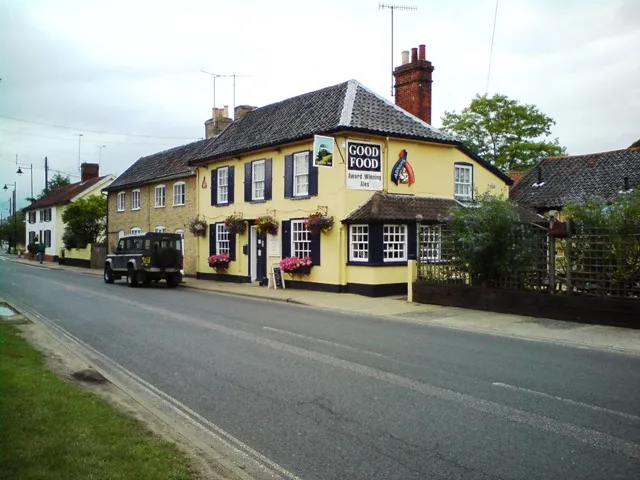
Photo: Tim Marchant, CC BY-SA 2.0, via Wikimedia Commons
The sign is the first thing you see and the last thing you remember. A painted lion, a crown, a pair of horses and a coach: these names are so familiar that they can feel like wallpaper. But they were not chosen at random. A British inn name is a small piece of history, a bit of branding and sometimes a quiet claim about loyalty, trade or location. It is worth reading before you arrive, as long as you do not mistake it for the whole story.
Lions and Heraldry
The White Lion and the Red Lion are among the most common inn names in Britain, and both come from heraldry. The white lion was associated with the Mortimer family and later with Edward IV; the red lion was a badge of Lancaster. In practice, many inns adopted a lion because it was a recognisable royal or noble emblem, because the local landowner used it, or because the sign painter had a template and a pot of red paint. A lion on the sign does not date a building precisely. It does suggest a long-standing site, often on a high street or a old route into town. Look for the older brickwork, the low doorway and the beam that makes tall guests duck. The name is a hint; the fabric is the evidence.
Crowns and Loyalty
The Crown is another classic. It could signal loyalty to the monarchy, a reference to the royal arms or simply a safe and respectable sign for an inn that wanted to look official. King's Head and Queen's Head names work in the same family. They were useful in a country where licensing and local politics could make a publican's life difficult. A crown on the sign said the house was loyal and orderly, or at least wanted to appear so. It does not tell you whether the building is Tudor or Victorian. It tells you the name was chosen to be trusted.
Coaches and Horses
Coach and Horses, Horse and Groom, Carriage and Horses: these names belong to the age of the turnpike road. A coaching inn was a place to change horses, feed passengers and put up for the night. The layout often gives it away: an archway into a yard, old stables, a long corridor, low ceilings and a bar that feels like it has absorbed a lot of weather. If the name says coach but the building is a 1970s roadhouse, you are looking at a theme, not a survival. If the name says coach and there is a cobbled yard behind the bar, you are probably in the right place. Ask where the old stables were. The answer is usually a car park now.
Bells and Brewing
The Bell is a name with several possible roots. It may refer to the church bell, to a bell founder, to the ringing of bells or simply to a familiar sign that a landlord could paint without much trouble. It often appears near a church, but not always. In some towns it is a reminder of an old brewery or a local tradition. The name is less specific than a lion or a coach, which makes it harder to read. Treat it as a pleasant clue rather than a date stamp.
What the Name Does Not Tell You
A name can survive a rebuild, a change of use or a new owner with a taste for heritage. A White Lion can be a 1930s roadhouse with a fake beam and a lion on the wall. A Crown can be a modern chain hotel in an old shell. A Coach and Horses can be a stripped-back gastropub with no yard at all. Check the listing, the old maps and the hotel's own history if it has one. Ask the staff which part of the building is oldest. The answer is often more useful than the sign.
Using the Name Well
Still, the name is useful. It sets expectations. A coaching inn suggests a yard, a fire and a certain kind of breakfast. A lion suggests a high street, a old frontage and perhaps a room at the front where the road noise arrives before the tea. A Crown suggests a central site, often near the market square. Use the name to ask better questions when you book: is the room in the old part or the new? Is there a yard? Is the bar the original one? The answers will tell you more about the welcome than the paintwork ever can.
A sign is a first clue, not a guarantee. The best British inns know this. They keep the name, keep the fire in and let the welcome do the rest.